Arenberg im Alten Reich
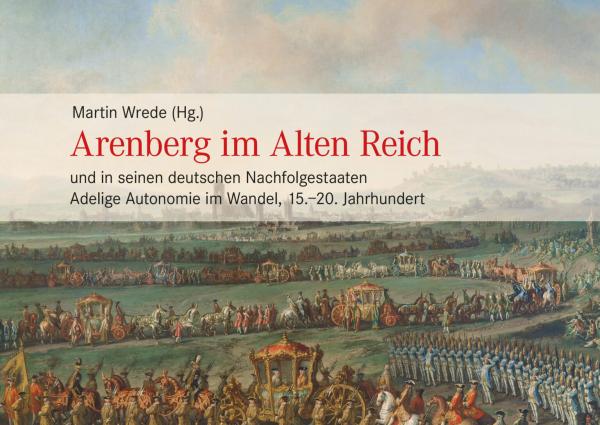
Martin Wrede
Schnell | Steiner
2025
978-3-7954-3894-4
German
OrderArenberg im Alten Reich
For the early modern period and the long nineteenth century, the ducal House of Arenberg perhaps offers the best example of a supranational European noble dynasty. The dukes held most of their estates in the former Burgundian Netherlands, yet their highest and most important title derived from the Holy Roman Empire. Cadet branches established themselves in the Habsburg Monarchy and in France. The volume examines the various political, social, and cultural identities connected to this situation beyond the end of the Ancien Régime and of the Holy Roman Empire: from autonomous imperial princes, lords of several small Rhenish territories who were at the same time Dutch aristocrats, to large landowners in north-western Germany who nevertheless remained connected to Brussels, Vienna, and eventually also Berlin. The First World War created an insoluble conflict in this regard.
- European noble history from a German perspective of the “longue durée”: how did identities change between states and nations, across historical “ruptures”?
- Regional Rhenish, Westphalian, and Lower Saxon rootedness of a European dynasty. How did princely rule function, and what effects did it have?
- By way of example, the fate of a small territory in the Holy Roman Empire is presented, its functionality and also its dysfunctionality.
Related
Book Presentation: Arenberg im Alten Reich. H.S.H. Duke Leopold of Arenberg and Prof. Dr. Martin…
read more >